How Often Should You Repaint Your Home’s Exterior in the Denver Metro Area
Most homeowners wonder how often they should repaint the exterior of their home, and the honest answer is that it depends. In milder climates, a paint job can last 10 years or more. Along the Front Range, sun, hail, and temperature swings cut that lifespan short. As a rule of thumb, plan on a full repaint every 5 to 10 years, and let the condition of your siding tell you when it’s time for a fresh coat.
The Short Answer for Denver Homeowners
Homes in the Denver metro area usually need repainting every 5 to 7 years. Wood siding sits at the early end of that range, while stucco and fiber cement can stretch closer to 10. Colorado weather is tough on exterior surfaces, so many homeowners here repaint more often than the national average. If your last paint job is approaching the 5-year mark, start watching for the warning signs below.
What Decides How Long Your Paint Actually Lasts
Three factors matter most when deciding how often to paint: the climate your home faces, the material on its side of the house, and the quality of the last job.
Sun, Hail, and the Front Range Climate
At high elevation, UV rays pass through less atmosphere, so they break down paint binders faster. South-facing walls fade and chalk first. Summer hail can crack a paint film in minutes, and those cracks let moisture in. Once water gets behind the coating, freeze-thaw cycles through winter lead to peeling paint. This constant wear and tear is why exterior paint fails sooner in Colorado than almost anywhere else.
Your Siding Material Matters More Than You Think
Paint bonds and ages differently on every surface. Porous wood drinks up moisture and moves with humidity, so it stresses the coating. Stucco is stable but needs a breathable masonry product. Fiber cement holds paint well because it barely expands or contracts. When you plan an exterior painting project, the material on your home should guide both the product and the schedule.
The Prep Work Behind the Last Paint Job
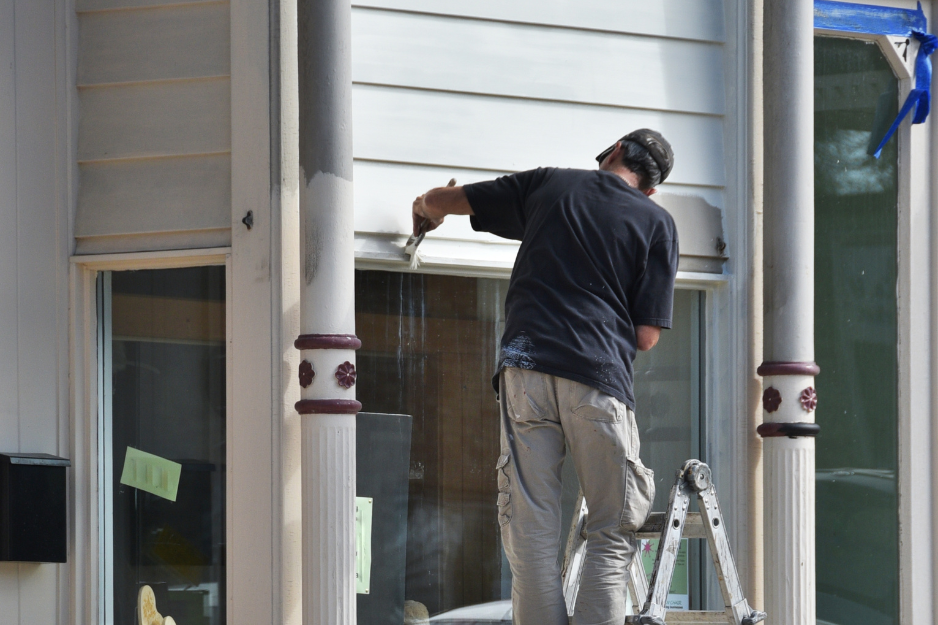
A paint job lasts only as long as the surface under it. Proper prep means scraping loose paint, sanding glossy areas, priming bare wood, and sealing gaps with caulk before anyone opens a can. If a crew skips those steps, even high-quality paint will peel within a few years. Paint acts as a barrier, but it can only protect your home when it bonds to a clean, dry surface.
A Repaint Timeline for Every Siding Type
Use these ranges as a starting point, then adjust for your home’s exposure and the paint quality used last time.
Wood Siding: Repaint Every 4 to 7 Years
Wood expands and contracts with every season, which works the coating loose over time. Plan on a fresh coat of paint every 4 to 7 years, and expect to repaint south-facing walls sooner than shaded ones. Climates like Colorado’s make that schedule tighter than it would be elsewhere.
Stucco, Fiber Cement and Brick: The Long-Lasting Surfaces
Stucco and fiber cement often go 8 to 12 years between repaints when the original job included good prep. Painted brick can last even longer with the right masonry coating. These surfaces still need inspection, because a small crack left alone can turn into a full repaint later.
Warning Signs That Override the Calendar
The calendar gives you a schedule, but your house gives you the real answer. Check it every spring.
Fading, Chalking and Peeling
Run your hand across a sunny wall. If a chalky residue comes off, the coating is breaking down. Visible fading, cracking, or peeling paint means the film no longer protects the surface underneath. Once peeling starts, it spreads, so don’t wait for the next scheduled repaint.
Cracked Caulk and Bare Wood
Look at the trim, window frames, and joints. Caulk that has pulled away lets water reach the wood, and exposed or grayed wood soaks up moisture that leads to rot. A touch-up now can hold things together, but widespread gaps mean it’s time to repaint the entire house.
Inside vs. Outside: Why the Timelines Differ
Interior paint lives in a controlled climate, so it often lasts 10 to 15 years before walls need a new look. The exterior of your home faces sun, hail, snow, and daily temperature swings, so its coating wears out several times faster. That’s why the interior and exterior follow completely different painting schedules, even on the same house. Many homeowners use the off-season to paint the interior while they wait for stable weather outside.
Planning Your Next Exterior Repaint
A quality exterior paint job starts long before the first coat of paint goes on. Choose high-quality paint, hire a painter who takes prep work seriously, and schedule the project for late May through June or late August through mid-September, when Denver’s weather helps the paint cure properly. If your siding is showing its age, a full repaint now costs less than repairs later. Homeowners across the Front Range communities face the same timing rules, and outdoor wood surfaces like decks and fences should follow the same weather window as the house.