Why Longmont’s Spring Winds Are Hard on Fresh Exterior Paint (and How to Time Your Repaint Around Them)
A Longmont spring morning can start calm and blue, and by early afternoon the wind off the foothills has the fences rattling. That shift matters more than most homeowners expect when they plan to paint their house exterior. People worry about rain and cold, but on the Front Range, wind is the weather condition that quietly decides whether a fresh exterior coat lasts or lets you down. If you want the best results from a spring exterior paint project, it helps to understand what the wind does and how to time the work around it.
What Longmont’s Spring Wind Actually Does to a Fresh Exterior Coat
Wind changes an exterior paint job in two ways at once. It pulls moisture out of the coating faster than the paint wants to give it up, and it throws debris at a surface that is still wet. Both work against a clean, durable finish.
Why Wind Makes Exterior Paint Dry Too Fast to Bond
Paint needs time to dry at a steady pace so the film can bond to the surface you are painting. Strong wind speeds up the water in latex paint, leaving the surface, so the paint can dry too quickly on top before it cures underneath. When paint dries too fast, the film often ends up weaker, and down the road that shows up as peeling or a coat that simply did not adhere the way it should. The point of a repaint is longevity, and rushed drying works directly against it.
How Grit and Debris Ruin the Finish on a Windy Day
Longmont’s spring gusts carry dust, pollen, and yard debris across every open surface. Land that grit on wet paint and it sticks, leaving a gritty, uneven finish instead of a smooth one. Once new paint starts to set with debris in it, there is no easy fix short of sanding and recoating. A calm window is what lets the paint go on smoothly and stay that way.
Why Wind and Low Humidity Often Arrive Together Here
Front Range spring air is dry, and wind drops the moisture at the surface even further. When you paint while the humidity is very low, the coating already dries faster than ideal, and wind compounds it. That combination is common in a Longmont spring, which is why a day that feels pleasant can still be a poor day to paint.
The Other Weather Conditions That Share Longmont’s Spring
Wind rarely shows up on its own. Reading the day as a whole, the way Front Range weather tends to behave, keeps you from trading one problem for another.
Cold Temperatures and Big Day-to-Night Swings
A Longmont spring day can hit the 60s at noon and drop near freezing after dark. Most exterior paint has a minimum temperature it needs to cure, and a late-day coat may not set before the temperature drops overnight. Cold temperatures slow the whole process, so the afternoon warmth that feels fine can disappear before the paint is ready. Waiting out the last hard overnight freezes matters at both ends of the season.
Why a Calm Morning Can Turn Windy by Afternoon
Front Range wind tends to build through the day. A still morning is no promise the afternoon will hold, and a crew that starts a wall at nine may be fighting gusts by two. That daily rhythm is exactly why timing, not just the date on the calendar, decides how a spring paint job turns out.
How to Time Your Exterior Repaint Around the Wind
Good timing is the difference between a coat that lasts and one you redo. It comes down to picking the right stretch of the season and the right hours of the day.
The Best Time to Paint a House Exterior in a Longmont Spring
The calmer windows usually arrive in late spring, once the hard overnight freezes have passed but before the peak summer heat sets in. Within a day, the morning hours are often stillest before the wind picks up. Matching the work to the right season gives the paint the steady conditions it needs to cure properly.
Reading the Forecast Before an Exterior Project
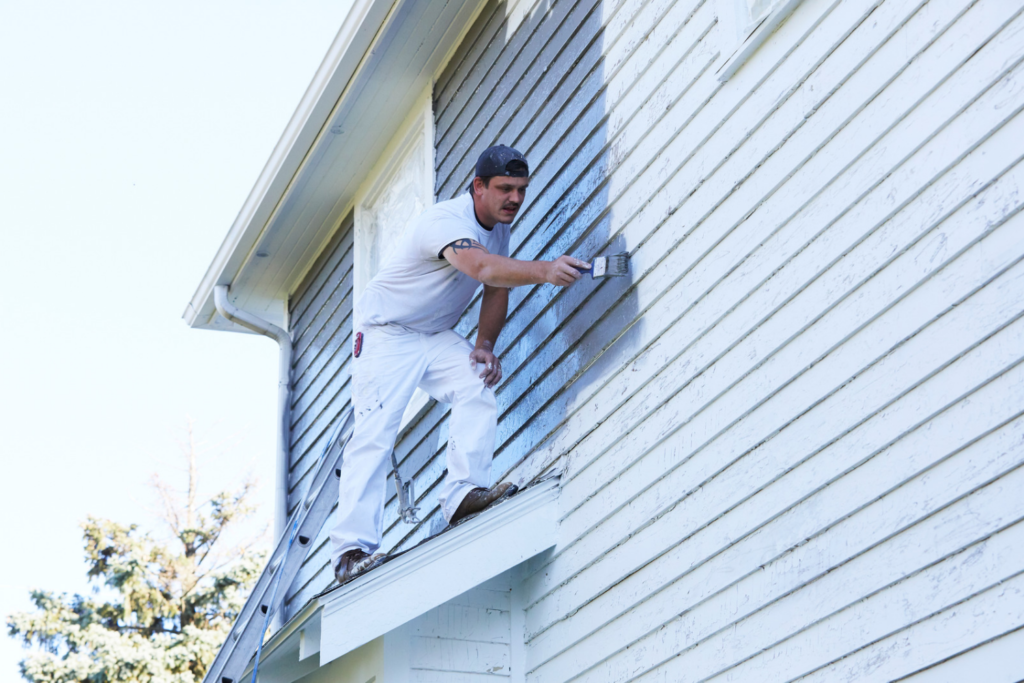
Before you schedule a repaint, read the forecast for more than temperature and rain. Check the sustained wind speed and the gusts, because a mild, dry day with 30 mph gusts is still a bad paint day. A crew that knows Longmont plans around this, painting the sheltered sides when the wind rises and moving a day that will not hold. That kind of planning applies to a home’s exterior and to larger exterior projects alike, and it is why timing the work well protects the finish far more than any single coat of the right paint can on its own.