Why Boulder Homeowners Should Finish Exterior Painting Before the First Freeze
Most people think of a paint job as finished once the last coat goes on. For exterior paint, the most important part happens over the next few days. The paint has to cure, and curing depends on temperature and dew. If you plan to paint the exterior of a house in Boulder, the first freeze is the deadline that decides whether the work lasts.
Why the First Freeze Marks the End of Boulder’s Exterior Painting Season
One freezing night won’t ruin a house. But it tells you the season has turned. After it arrives, cold nights come more often, and the warm, dry days that paint depends on become harder to find.
When the First Freeze Usually Arrives in Boulder
The NOAA Physical Sciences Laboratory keeps Boulder freeze records that go back to 1897. They show the first freeze arriving as late as November 2 and as early as September 8, which happened in 2020. That range is the real challenge. A homeowner can’t count on a fixed date, because the season can end weeks earlier than expected.
Why House Paint Needs a Warm Season to Cure
Latex house paint doesn’t just dry. It cures as its particles melt together into one continuous film, and that process needs warmth. Sherwin-Williams says traditional latex paint needs temperatures above 60 degrees Fahrenheit to cure properly. Its low-temperature products work down to 35 degrees. Below a product’s range, the film never fully forms, and the paint never bonds the way it should.
How the Fall Painting Window Shrinks as the Season Goes On
The season doesn’t end in a single day. It narrows week by week, and each week leaves fewer days that work for painting.
Why Dew and Cooling Weather Conditions Cut Into Fall Painting Days
Sherwin-Williams calls fall “a tricky time” for exterior painting, and dew is a big part of the reason. Warm fall afternoons often give way to cold evenings, and dew forms on surfaces soon after sunset. That moisture gets into paint that hasn’t cured and can cause surface staining and poor adhesion. Sherwin-Williams advises keeping the temperature in range and above the dew point for at least 48 hours after painting. As fall goes on, fewer stretches of weather meet that standard.
How Fall Rain and Early Snow Delay Surface Preparation
Good prep needs dry wood and siding. Sherwin-Williams recommends waiting at least a day after heavy rain, and it warns that moisture in the wood leads to peeling. Scraping loose paint, repairing damaged boards, and replacing failed caulk all have to happen in dry weather. Every fall storm uses up days the project can’t get back. A wet week in October can push the work right up against winter.
What Happens When Exterior Work Runs Past the First Freeze
When the season ends before the project does, the house usually pays the price. The trouble shows up in two places: the sections that never got painted and the paint that went on too late.
What a Homeowner Risks When the Exterior Goes Into Winter Unfinished
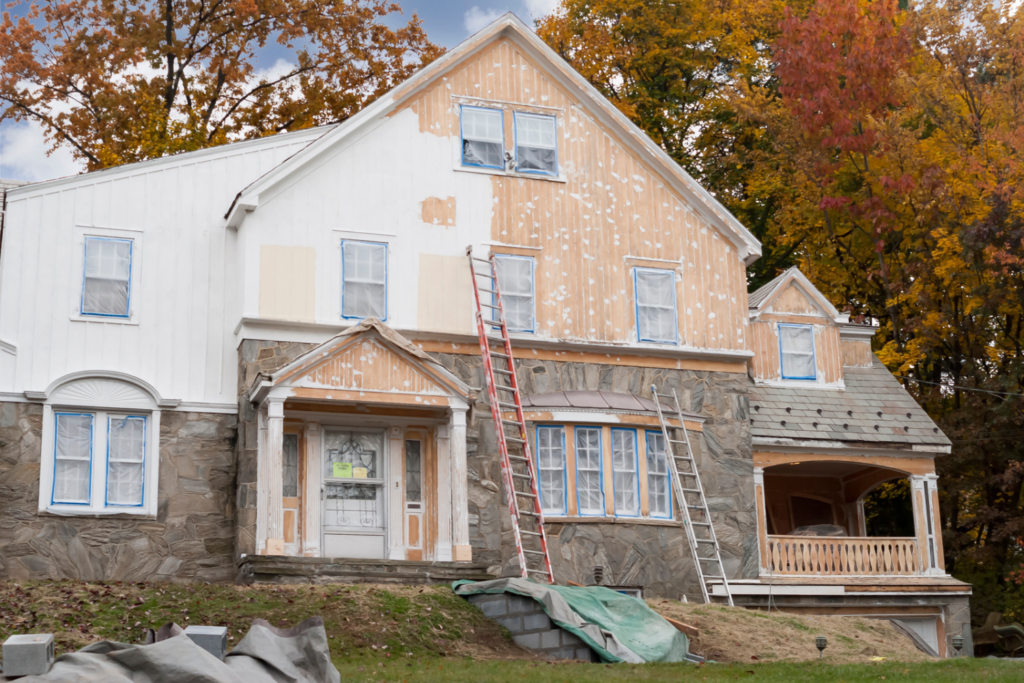
An unfinished job leaves parts of the home’s exterior with old, failing paint or primer that has no topcoat. Those sections face snow, ice, and repeated freezing and thawing with no fresh protection. The finished walls go into winter protected, and the rest go in exposed. The unpainted areas are often the ones that need work most, and they spend months taking on moisture.
What Late Season Paint Can Look Like by Spring
Paint that gets cold or damp before it cures doesn’t form a proper film. Sherwin-Williams lists the results: surface staining, a white or frosted look on dark colors, and adhesion problems that can lead to peeling. These flaws stand out most on the entryway, where the front door and trim catch the eye. A job meant to improve curb appeal ends up showing its mistakes right where people look first.
How Low Temperature Exterior Paint Stretches the Season, and Where It Stops
Many homeowners ask whether cold weather paint solves the timing problem. It helps, but it doesn’t remove the deadline.
Why Even Cold-Rated House Paint Has a Seasonal Limit
Sherwin-Williams designs its Duration, Resilience, SuperPaint, and A-100 Exterior latex paints to go on and cure at temperatures as low as 35 degrees Fahrenheit. The company says these paints can extend the painting season by as much as two months. They still have limits. The temperature has to stay above the minimum, the surface has to stay dry, and the paint still needs time above the dew point. Sherwin-Williams advises following each product’s label directions. Once freezing weather becomes the normal pattern, no paint can cure properly.
Why Planning in Late Summer Keeps the Project Ahead of the Freeze
The best protection against the first freeze is starting early. Planning in late summer gives the calendar room for prep, rain delays, and the drying time each coat needs. It also leaves time to choose products suited to Boulder’s climate and to plan around the Front Range weather that wears on exterior paint. An early exterior estimate gives the painter enough lead time that the job never has to race the cold. As with picking the best season to paint, the best results come from working while the weather still helps. Paint that goes on well before the first freeze has the warm days it needs to cure, so the house goes into winter fully protected.